Poplin vs. twill shirt: Choosing the ideal weave
Poplin or twill? This is often the first choice to make, even before thinking about colour or pattern. The two weaves look similar at first glance — both are cotton, both are used for dress shirts — but they behave very differently in terms of feel, wrinkle resistance, breathability and formality. This guide breaks down the differences clearly, section by section, drawing on ALUMO's shirt fabric ranges, rooted in Swiss tradition since 1918.
- Weave definitions: how they differ structurally
- Care and wrinkle resistance: which holds up better?
- Seasonality: which weave for which climate?
- Dress codes: poplin or twill for which occasion?
- ALUMO ranges: the right quality for each weave
- FAQ
Weave definitions: how they differ structurally
A weave is the way warp threads (vertical) and weft threads (horizontal) interlace on the loom. Poplin and twill follow two completely different interlacing patterns — and that difference explains everything else: the feel, the appearance, the weight and the performance of the fabric.
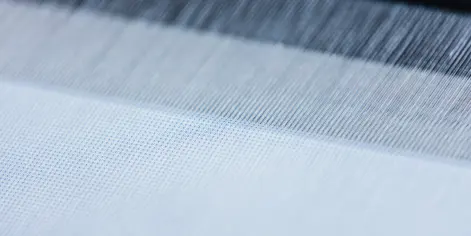
Poplin — plain weave: each weft thread passes alternately over and under each warp thread. The result is a smooth, dense, matte surface.
Twill — diagonal weave: the weft thread skips across several warp threads before interlacing, creating visible diagonal ribs on the surface. The result is a textured, slightly lustrous fabric with a softer hand.
What this means in practice
Because poplin's threads cross at every point, the fabric is very tightly packed — this is what makes it smooth, flat and matte. It feels crisp and clean. Twill's longer thread floats give the fabric more flexibility and movement, which is why it drapes more softly and picks up a subtle sheen from the light.
| Characteristic | Poplin | Twill |
|---|---|---|
| Weave structure | Plain (over-under alternation) | Diagonal (offset interlacing) |
| Surface appearance | Smooth and matte | Textured with subtle lustre |
| Hand feel | Crisp and structured | Soft and supple |
| Drape | Structured, holds its shape | Fluid, falls naturally |
| Visible pattern | None — uniform flat surface | Diagonal ribs |
How to tell them apart in a showroom
- Hold the fabric to the light: visible diagonal ribs = twill. Uniform flat surface = poplin.
- Feel the hand: poplin feels crisper; twill feels noticeably softer and more fluid.
- Drape it over your hand: twill falls in soft folds; poplin stays more rigid and upright.
At ALUMO, the Soyella range (Ne 170/2) illustrates both weaves at their finest: the Soyella poplin is the lightest and smoothest expression of the plain weave, while the Soyella Twill brings the same ultra-fine yarn with the added softness and lustre of the diagonal structure.
Care and wrinkle resistance: which holds up better?
This is where the structural difference between the two weaves has the most visible impact in daily wear. Poplin and twill behave very differently when it comes to creasing, ironing and long-term durability.
Wrinkle resistance: twill wins
Twill's diagonal structure distributes mechanical stress more evenly across the fabric. When you sit, move or pack a shirt, the diagonal ribs allow the fibres to flex and recover — fewer creases and easier ironing. Poplin, with its tightly packed plain weave, has less give. It looks sharp when freshly ironed, but picks up creases more easily during the day.
| Criterion | Poplin | Twill |
|---|---|---|
| Creases during wear | More easily | Less easily |
| Ironing method | Steam on slightly damp fabric | Quick dry pass usually enough |
| Ideal for travel | Less suited | Well suited |
| Abrasion resistance | Good (higher with 2-ply ELS yarn) | Excellent |
| Wash durability | Very good (2-ply quality) | Very good |
Poplin: always iron with steam on slightly damp fabric — the only reliable way to remove set creases.
Twill: a quick pass with a dry iron is enough in most cases. Any remaining creases disappear easily with a little heat.
A note on durability
Twill generally wears better against friction over time. However, yarn quality matters just as much as weave structure. A premium 2-ply ELS poplin like the Supraluxe (Ne 120/2) or the Superior (Ne 100/2) withstands years of wear and repeated washing without losing its shape. For travel, ALUMO's Sartoria Voyage fabrics offer certified crease resistance in both weave structures.
Seasonality: which weave for which climate?
Poplin and twill respond very differently to heat and cold. The key factors are weight (g/m²) and weave density: a lighter, more open fabric lets more air through. Here the two weaves are clearly suited to different seasons.
| Property | Poplin | Twill | ALUMO recommends |
|---|---|---|---|
| Best season | Spring / Summer | Autumn / Winter | — |
| Typical weight | 80–120 g/m² | 130–180 g/m² | — |
| Breathability | Excellent — air circulates freely | Moderate — retains warmth | — |
| Opacity | Slightly sheer in white | Fully opaque | — |
| Warmth retention | Low — keeps you cool | Higher — comfortable in the cold | — |
| Top ALUMO choice | Soyella (Ne 170/2) | Cashmerello Twill | — |
Poplin in summer, twill in winter — but with nuance
Poplin's light weight and open plain weave allow heat to escape easily — making it the go-to choice for warm weather and humid climates. The Soyella poplin is the finest example: almost weightless, with a feel close to silk. One caveat: white poplin can be slightly sheer in strong sunlight. For formal white shirts, ALUMO's Supraluxe white fabrics offer better opacity at a similar fineness.
Twill, at 130–180 g/m², creates a natural layer of warmth that makes it the better choice for autumn and winter. Its denser structure is also fully opaque, giving the shirt a more substantial feel. For winter specifically, ALUMO's Cashmerello — 15% cashmere blended with cotton — takes the twill experience further: warm, incredibly soft and comfortable against the skin.
Can you wear twill in summer? A very fine twill like the Soyella Twill (Ne 170/2) is acceptable in air-conditioned environments. But for outdoor heat, poplin is simply more comfortable.
Dress codes: poplin or twill for which occasion?
Poplin and twill occupy different positions in terms of formality and visual impact. Understanding this distinction makes it easy to choose the right fabric for each situation.
Poplin: the formal benchmark
In the traditional codes of shirt-making, white poplin is the reference for formality. Its smooth, matte, uniform surface is understated by design: it lets the suit, the tie and the occasion speak. Black tie, morning dress, classic business dress — poplin is the correct choice. It does not compete for attention; it completes the look.
Twill: texture and visual richness
Twill is not more formal than poplin — but it is richer. Its diagonal ribs catch the light and give the shirt a subtle three-dimensional quality that poplin does not have. This makes twill the better choice when you want to add depth to your appearance: important meetings, evening events, occasions where polished but not strictly formal is the right register.
Poplin → black tie, formal business, conservative environments. The fabric recedes and lets everything else take centre stage.
Twill → evening events, client dinners, high-profile meetings where texture signals attention to detail.
| Occasion | Weave | Why | Suggested ALUMO fabric |
|---|---|---|---|
| Black Tie | Poplin | Strict formality, clean white surface | Soyella – White |
| Daily office wear | Poplin | Crisp, precise, professional | Supraluxe – White/Blue |
| Summer wedding | Poplin | Light, breathable, elegant | Soyella – White |
| Evening event / gala | Twill | Subtle lustre, visual depth | Sartoria Ceremony |
| Important meeting | Twill | Textured, polished, confident | Soyella Twill |
| Long-haul travel | Twill | Wrinkle-resistant, stays sharp | Sartoria Voyage |
Pairing with suits and accessories
Poplin pairs naturally with textured suits — tweed, flannel, brushed wool. The contrast between the flat, matte shirt and the rugged jacket creates a balanced, classic combination. Light blue Supraluxe poplin is a timeless office standard.
Twill works best with smoother cloths — fine worsted, silk ties, polished accessories. Its subtle sheen complements other refined surfaces without competing. Dark blue twill paired with a navy worsted suit and a silk tie is a consistently strong choice.
ALUMO ranges: the right quality for each weave
ALUMO is a house rooted in Swiss tradition, recognised since 1918 by more than 2,000 tailors and shirtmakers around the world. Most qualities are available in both poplin and twill — the choice of weave is a separate decision from the choice of quality level. Here is how the two translate across the range.
| Quality | Count (Ne) | In poplin | In twill | View range |
|---|---|---|---|---|
| Superior | 100/2 | Crisp, structured, reliable everyday wear | Solid, professional, excellent durability | → Superior |
| Supraluxe | 120/2 | Fine ELS cotton, smooth and long-lasting | Twill Soprano: refined lustre, excellent hold | → Supraluxe |
| Soyella | 170/2 | Silk-like lightness, the finest poplin in the range | Silky lustre, ideal for evening and couture shirts | → Soyella |
| Cashmerello | — | — | 15% cashmere: the ultimate winter twill | → Cashmerello |
The Sartoria collection
ALUMO's Sartoria collection brings together the bestselling poplin and twill fabrics in 4 thematic bunches:
- Bunch No. 1 – Timeless: classic white and blue poplin and twill for everyday office wear.
- Bunch No. 2 – Contemporary: modern textures, structured stripes, twill checks.
- Bunch No. 3 – White & Colors: full palette of poplin in white, pink and beige.
- Bunch No. 4 – Ceremony: ceremony twills and Voile Plissé for black tie and formal occasions.
In short: poplin is the weave of lightness, formality and clean precision. Twill is the weave of texture, warmth and visual depth. The right choice depends on the season, the occasion and the look you are going for — and ALUMO offers both at every level of quality.
Ready to choose? Discover the full ALUMO range or request a sample Bunch Book to feel the difference in your hands. Our team is available for personalised advice via our contact form.
FAQ
What is the main difference between poplin and twill in a men's shirt?
The difference starts at the loom. Poplin uses a plain weave — threads cross at every point, producing a smooth, dense and matte surface. Twill uses a diagonal weave — threads skip across several points before interlacing, creating visible ribs, a subtle lustre and a softer hand. In use: poplin is crisper, lighter and more formal; twill is softer, warmer and more textured.
Which is better for summer: poplin or twill?
Poplin. Its lighter weight (80–120 g/m²) and open weave allow much better airflow than twill. The Soyella poplin (Ne 170/2) is the finest summer option in the ALUMO range. A very fine twill like the Soyella Twill can work in air-conditioned settings, but for outdoor warmth poplin is the more comfortable choice.
Which holds up better to wrinkles: poplin or twill?
Twill. Its diagonal structure distributes stress more evenly, meaning it creases less during the day and is easier to iron. For travel, ALUMO's Sartoria Voyage fabrics offer certified crease resistance. Poplin irons to a sharper finish but picks up creases more easily with movement.
Is poplin more formal than twill?
Yes — in the traditional hierarchy of shirt-making. White poplin is the benchmark for black tie, morning dress and formal business attire. Twill is not less elegant, but it is richer and more textured — better suited to occasions where you want your shirt to add visual character rather than simply complete the suit.
Is ALUMO poplin more fragile than ALUMO twill?
Not in the premium ranges. A 2-ply ELS poplin like the Supraluxe (Ne 120/2) or the Soyella (Ne 170/2) is highly durable and withstands repeated washing without losing structure. Entry-level single-ply poplins are more fragile — but that is a question of yarn quality, not weave.
How do I know if an ALUMO fabric is authentic?
ALUMO fabrics are part of a long Swiss tradition of quality, backed by recognised certifications (Oeko-Tex, Supima or Sea Island cotton depending on the range). Order directly from alumo-shop.com or through an authorised ALUMO tailor partner to guarantee authenticity and full traceability.