Which interfacing should you choose for a shirt?
In high-end shirtmaking, while the fabric is the heart of the garment, the interfacing is just as vital. It provides the essential structure for the collar, placket, and cuffs, ultimately defining the shirt’s character—ranging from an impeccable drape for formal attire to a relaxed suppleness for the weekend.
At ALUMO, we believe our exceptional fabrics deserve the finest technical support. Drawing on our expertise, here is our guide to pairing our signature qualities with the highest-performing interfacings.
Table of contents :
1. Interfacing Types: Woven vs. Non-woven
2. Application: Fusible (Heat-bonded) vs. Sew-in
3. Weight Selection: Choosing based on the desired result
4. Pairings: The right interfacing for every fabric
5. Summary Table: Our official recommendations
1. Different Types of Interfacing
The choice between woven and non-woven interfacing is the first step in defining a shirt's longevity. Each technology meets a specific need of the modern workshop.
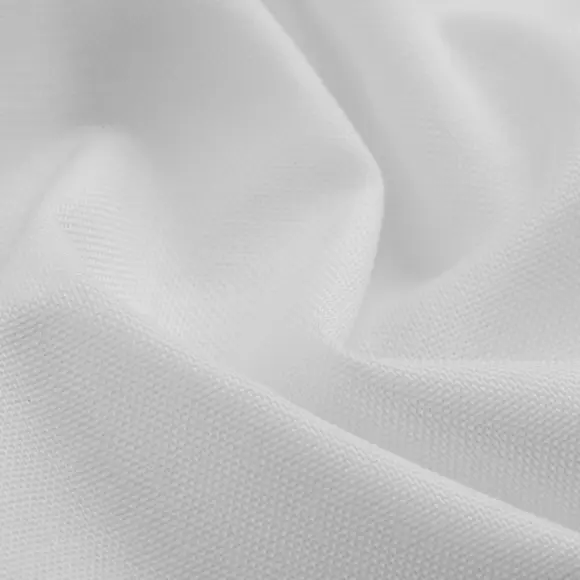
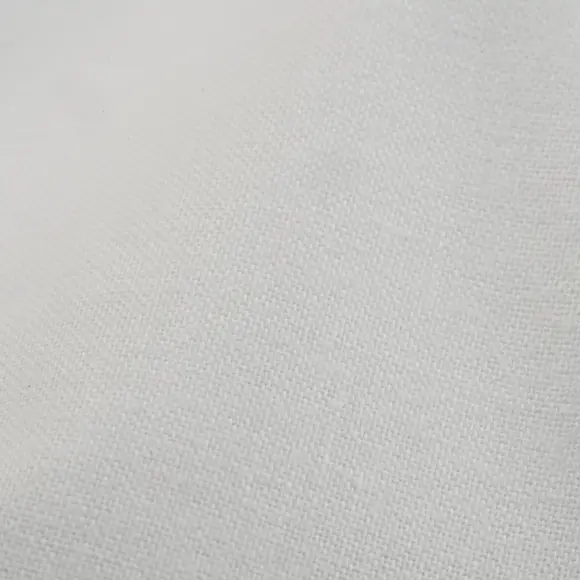
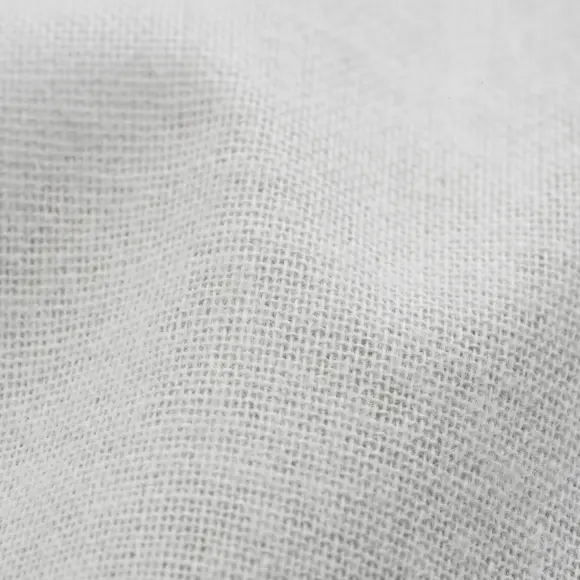
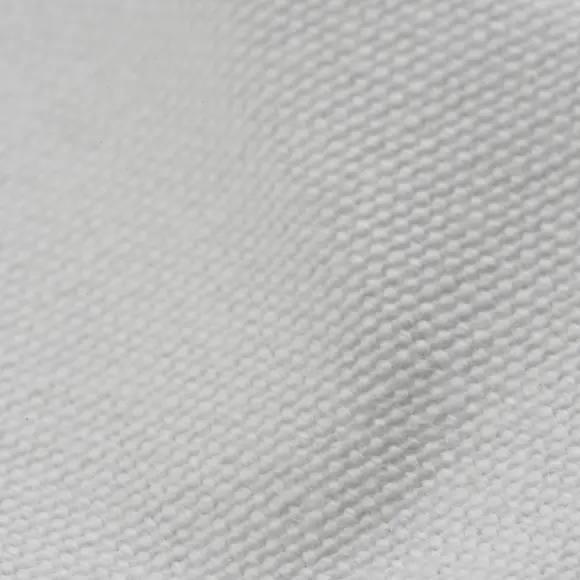
Woven Interfacing (The Standard of Excellence – Left): This is the essential choice for traditional high-end shirtmaking. Thanks to its weave, it offers exceptional dimensional stability and unique "shape memory." It is the only type capable of ensuring a collar retains its natural drape and elegance, wash after wash, year after year.
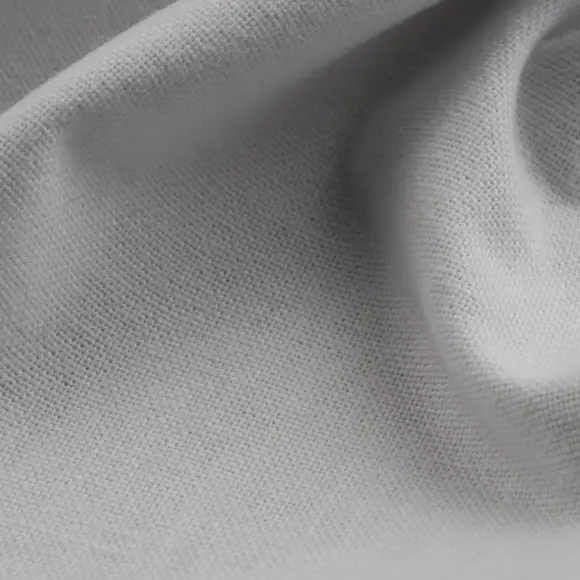
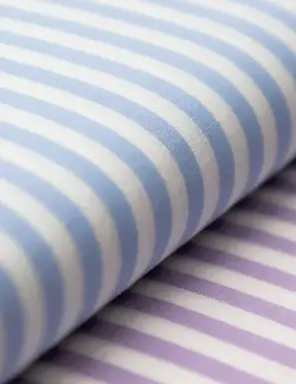
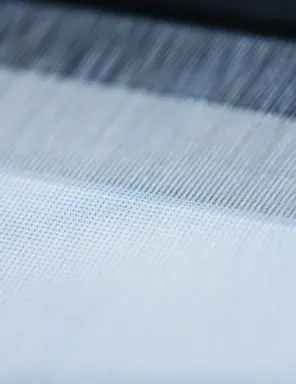
Non-Woven Interfacing (The Industrial Alternative – Right): Although widely used for its ease of handling in mass production, non-woven is a simplified technology with a random fiber arrangement. While it provides a uniform structure without grainline constraints, it lacks the resilience and "snap" of a woven interfacing. It is generally favored for speed of execution rather than the pursuit of the perfect drape. Non-woven interfacing can degrade over time, negatively impacting the visual appearance (pilling, loss of shape).
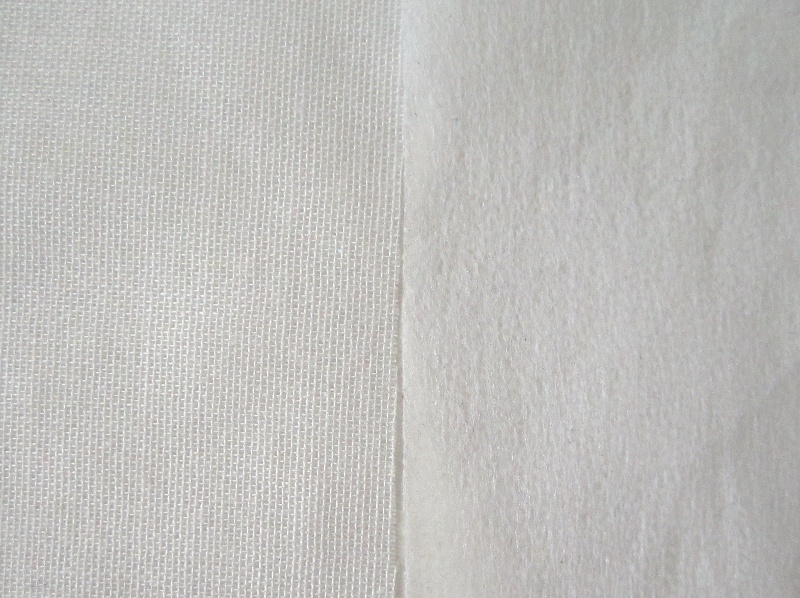
Beyond the material itself, the method used to attach the interfacing can fundamentally change the "hand" (feel) and the roll of the collar.
2. Interfacing Application for Shirts
Sew-in Interfacing (The Tailoring Art): This is the gold standard for true high-end shirtmaking. The interfacing remains "floating" between the layers of fabric, allowing the material to retain its full suppleness and natural breathability. The collar offers an incomparable "roll" (the curve of the collar) and superior longevity, as it eliminates the risk of bubbling caused by repeated washing. This is the choice of purists and sartorial enthusiasts.
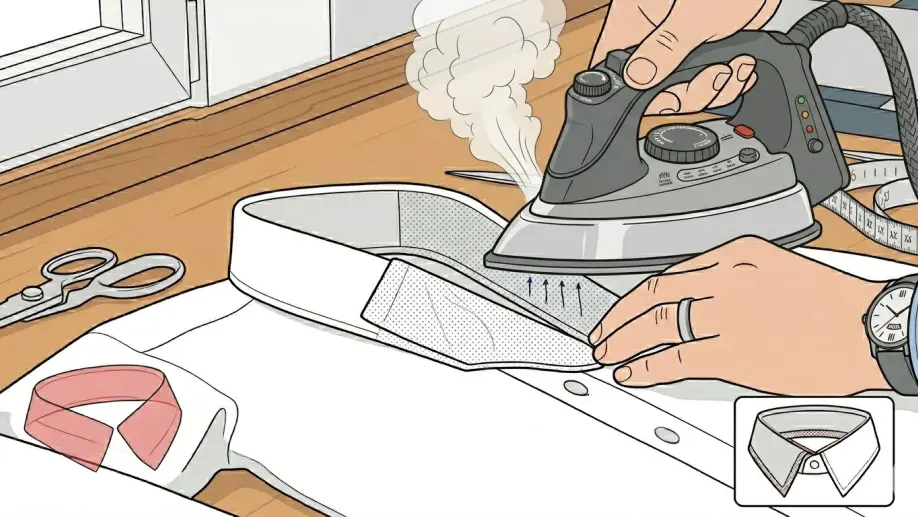
Fusible Interfacing (Modern Performance): Practical and efficient, it fuses with the fabric through heat and pressure. This technique provides immediate crispness and makes it easier to achieve rigidity for highly structured collars. At ALUMO, we strictly recommend cutting the base interlining on the bias for our fusible references; this compensates for the stiffness of the adhesive and ensures optimal comfort for the wearer.
3. Choosing the Interfacing Weight for Your Shirt
The weight (GSM) and the finish (soft, extra-soft, and brushed extra-soft) determine the firmness of the collar. ALUMO offers a selection of Made in Europe interfacings, using guaranteed BCI cotton (non-Chinese origin), ranging from 105 g/m² to 280 g/m² to suit every style:
Maximum Lightness (105 g/m²):
These references are the finest in the range. They are primarily used as a base or for extremely lightweight collars that must maintain total fluidity.
The Versatile Zone (155 to 235 g/m²):
Most of our "Medium Soft" products fall into this category. It is worth noting that even at a high weight of 235 g/m², the construction allows for more flexibility compared to "Firm" finishes.
High Density and Rigidity (up to 280 g/m²):
For a collar that must remain perfectly stationary—ideal for premium, high-quality collars—our 7000.ML29NCZ at 280 g/m² is our heavyweight option, providing the most substantial structure for haute shirtmaking.
SKU Reference | Weight (GSM) | Drape / Hand |
|---|---|---|
| 105 g/m² | Soft | |
| 150 g/m² | Medium Soft | |
| 155 g/m² | Medium Soft | |
| 170 g/m² | Medium Soft | |
| 185 g/m² | Firm | |
| 235 g/m² | Medium Soft | |
| 280 g/m² | Firm |
Special Qualities :
CASHMERELLO: To preserve its brushed finish and exceptional softness, we recommend using the 7000.FT1600ESG.
CENTOLINO: For a "casual" look, opt for the 7000.ML285ESG (sew-in) or the 7000.FT1600ESG (fusible).
MARKUS KNIT: As this is a knit fabric, standard woven interlinings are not suitable. This product requires a specific type of interfacing designed to match its elasticity.
The Classic Range
(Oxford, Superior, Soyella, Supraluxe, Sea Island, etc.)
The Classic Fusible Collar: base: 7000.FT1700ES — Must be cut on the bias for enhanced comfort.
Reinforcement: 7000.FT1640ES (soft) or 7000.FT1160ES (firm), depending on the client’s preference.
The Premium Floating (Sew-in) Collar:
Use the 7000.ML29NCZ for traditional high-end construction, providing an incomparable "collar roll."
5. Summary Table: ALUMO Pairing Recommendations
To ensure the perfect match between your chosen ALUMO quality and its technical support, follow this detailed guide:
ALUMO Fabric Quality | Recommended SKU | Characteristics | Application | Desired Effect |
|---|---|---|---|---|
Cashmerello | Fusible (170g/m²) | Collar | Brushed finish, medium-soft drape | |
Centolino | Sew-in (150g/m²) | Collar, Placket, Cuff | Casual look, firm drape | |
Centolino | Fusible (170g/m²) | Collar, Placket, Cuff | Casual look, medium-soft drape | |
Markus Knit | Not Recommended | — | — | Use specialized knit interfacing |
Classic Range (Oxford, Soyella, etc.) | Fusible (105g/m²) | Collar (Base), Placket, Cuff | Soft drape (bias cut) | |
Classic Range (Oxford, Soyella, etc.) | 7000.FT1640ES (Reinforcement) | Fusible (155g/m²) | Collar (Reinforcement), Placket, Cuff | Medium to soft drape |
Classic Range (Oxford, Soyella, etc.) | 7000.FT1160ES (Reinforcement) | Fusible (235g/m²) | Collar (Reinforcement) | Firmer drape |
Classic Range (Oxford, Soyella, etc.) | Sew-in (150g/m²) | Premium Floating Collar | Traditional construction, firm drape |