Bespoke tailoring guide: Mastering the custom suit
The modern sartorial landscape often obscures the distinction between mass production and true artistry, leaving many enthusiasts with garments that fail to reflect their individuality. Our bespoke tailoring guide serves as an authoritative resource to help you navigate this hierarchy and master the technical lexicon required for a superior commission. By understanding the nuances of full canvas construction and regional shoulder styles, you transform a simple purchase into a definitive investment in your personal legacy.
- Bespoke Tailoring Standards and the Hierarchy of Craft
- Anatomy of a Masterpiece: Internal Construction and Shoulders
- Decoding the Fabric Lexicon and Material Selection
- The Progressive Journey from Measurement to Final Delivery
Bespoke Tailoring Standards and the Hierarchy of Craft
While the term "tailored" is frequently brandished in modern marketing, a rigorous hierarchy separates industrial production from authentic sartorial art. Understanding these distinctions is paramount for any gentleman or lady seeking to transcend the limitations of mass-manufactured clothing.
Distinguishing Ready-to-Wear from Made-to-Measure
Ready-to-Wear represents mass production utilizing standardized blocks. These garments fundamentally ignore individual posture and nuances. No personalization occurs during the initial cutting phase. It is a system built for the average, not the individual.
Made-to-Measure serves as a middle ground. It modifies a pre-existing template to match basic measurements. However, the construction remains rooted in factory-based machine processes. It is an evolution, yet still constrained by industrial origins.
MTM faces significant limitations with complex physiques. Factory adjustments cannot rectify dropped shoulders or extreme spinal arching. These rigid templates possess physical boundaries that machines simply cannot overcome. The silhouette remains a compromise.
Ultimately, the choice is clear. Ready-to-Wear prioritizes immediate convenience. Made-to-Measure offers a marginally better fit but lacks the true soul of artisanal craft. It is a shadow of excellence.
%20(1).jpg)
The Technical Superiority of True Bespoke Craftsmanship
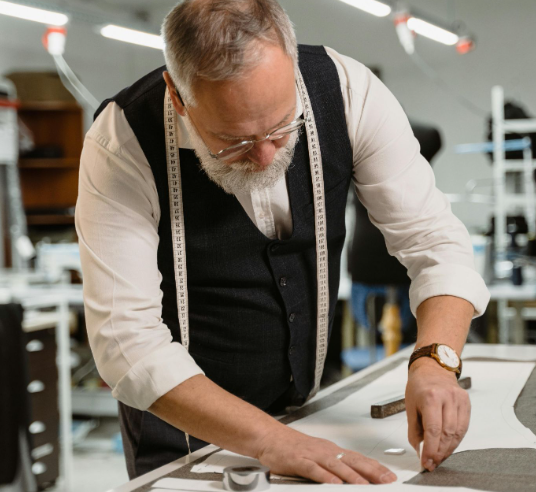
True bespoke adopts a "zero-base" philosophy. Every commission begins with a blank sheet of brown paper. The cutter drafts a unique pattern for one specific human anatomy. Consequently, no two patterns are ever identical in existence.
We must also consider the "house style" concept. Every prestigious tailoring house possesses a signature silhouette or underlying philosophy. Your personal taste must align with their specific aesthetic to achieve a harmonious result. It is a stylistic marriage.
Authentic bespoke requires hundreds of hand-sewn stitches to ensure flexibility. By selecting the finest materials from all products available, the artisan creates a garment with unparalleled internal structure. Hand-stitching allows the fabric to breathe and move naturally.
The emotional value is profound. It represents a deep collaboration between the artisan and the wearer. This meticulous process creates a garment that feels like a second skin. It is the pinnacle of personal expression.
Anatomy of a Masterpiece: Internal Construction and Shoulders
Moving from the pattern to the physical build, the internal architecture determines how the suit actually moves and ages.
Structural Integrity of Full Canvas vs Fused Methods
Full canvas construction stands in stark contrast to fused methods. Fusing relies on chemical glue to bond fabric to interlining. This shortcut often results in a stiff, lifeless appearance.
The hallmark of quality remains the animal hair canvas. This natural layer is stitched loosely between the cloth. It allows the jacket to breathe and drape naturally. It actually improves with every wear.
.png)
Full canvas: durable, breathable, molds to body.
.png)
Fused: prone to bubbling, rigid, shorter lifespan.
Discover the Canvas and Premade solutions from our sister company Chargeurs PCC.
Defining Character Through Neapolitan and British Shoulder Styles
The Neapolitan shoulder epitomizes Italian nonchalance. It features the "Spalla Camicia" or shirt-like construction. It is soft, unpadded, and perfect for a relaxed look.
Contrast this with the British silhouette. This style uses padding to create a structured, military-inspired frame. It projects authority and formal presence.
We must also consider the roped shoulder effect. This involves a slight ridge at the sleeve head. It draws the eye upward and broadens the chest. It is a classic sartorial power move.
Signature Details from Milanaise Buttonholes to High Armholes
The Milanaise buttonhole is a true sign of excellence. This is a silk-corded, hand-sewn masterpiece. It takes hours to perfect. Only the best tailors still offer this detail.
We emphasize the mobility provided by high-set armholes. They allow you to move your arms without the whole jacket lifting. This is a hallmark of superior cutting.
Finally, we look for functional buttonholes. These working buttonholes were originally for doctors to roll up sleeves. Today, they signal a truly bespoke garment.
Decoding the Fabric Lexicon and Material Selection
Even the best construction fails without the right cloth, making fabric selection the most tactile part of the journey.
Understanding Super Numbers and Technical Cloth Performance
Super numbers define the sheer fineness of wool fibers. Higher denominations indicate thinner, softer, and more delicate threads. We must caution against the assumption that a higher number always equates to a superior garment for every occasion.
There is a distinct durability trade-off. A Super 180s feels as luxurious as silk but wrinkles with frustrating ease. Such a delicate weave is hardly ideal for the rigors of a daily work suit.
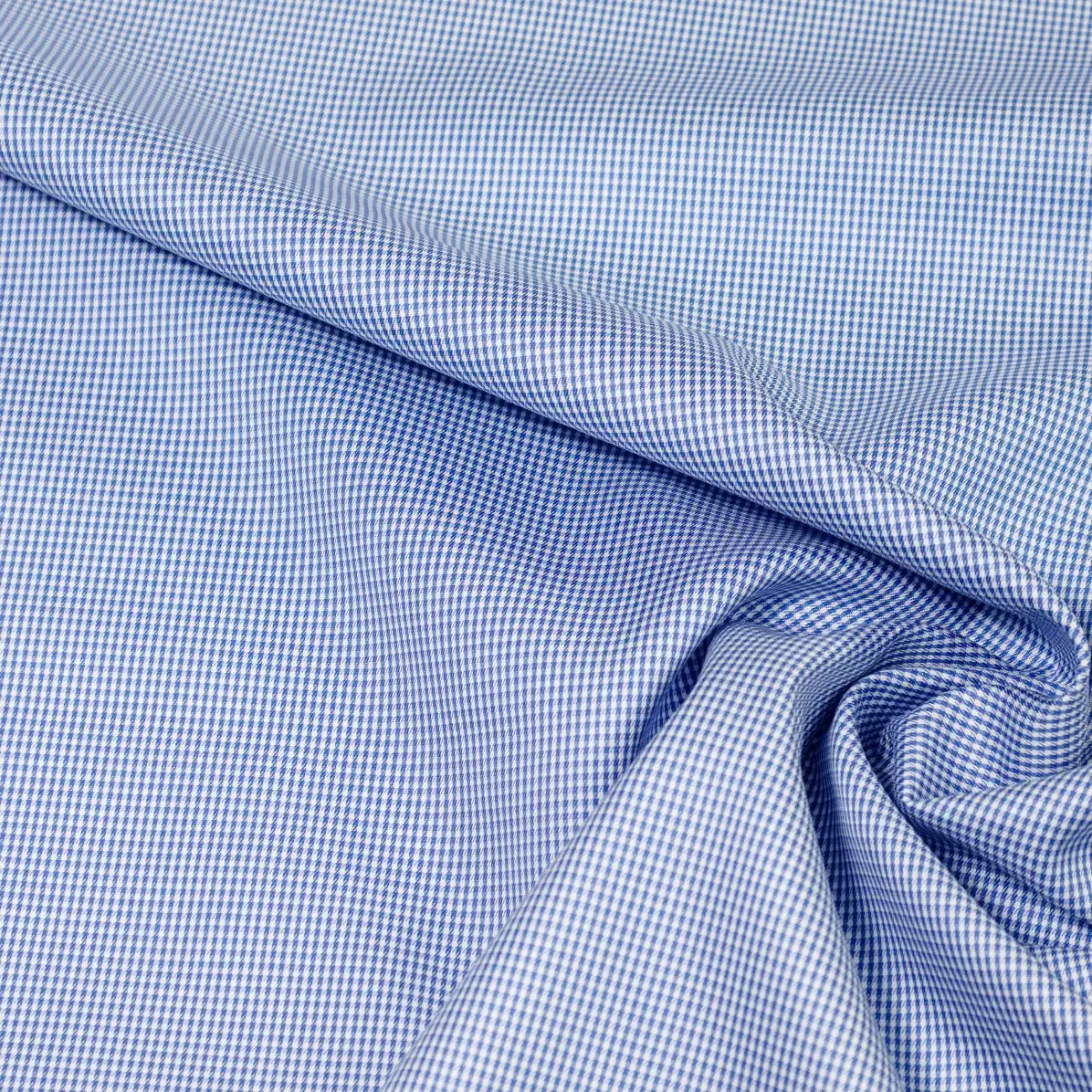
For those seeking a refined yet resilient shirt to accompany their tailoring, we recommend exploring the Twill Soprano medium blue check. This fabric exemplifies how technical precision meets aesthetic grace in high-end shirting.
We suggest a pragmatic sweet spot. You can make a selection based on yarn counts, see our blog on this topic. High-quality fabrics handle regular wear beautifully while maintaining a sharp, professional drape.
Selecting Weaves for Seasonal Utility and Aesthetic Texture
Seasonal properties dictate the comfort of your ensemble. Flannel remains heavy and warm for winter. Zephirlino offers an open-weave, breathable structure for summer. Twill, however, performs admirably throughout the entire year.
| Quality/Weave Type/Composition | Season | Texture | Best Use |
|---|---|---|---|
| Cashmerello (cotton & cashmere) | Winter | Fuzzy/Soft | Cold weather elegance |
| Centolino (linen) | Summer | Grainy/Open | Summer men's shirt |
| Twill (cotton) | All Year | Smooth/Diagonal | Versatile business suits |
| Voyage (wrinkle-free cotton) | Summer | Crisp/Dry | Travel and high humidity |
We guide your selection based on wear frequency. A heavy wool holds its architectural shape significantly longer. Conversely, thinner, more luxurious fabrics require more rest between wears to recover their integrity.
We encourage you to touch the swatches personally. Texture profoundly affects how color interacts with natural light. Always check the fabric against your skin to appreciate its true character. Check out our bunch books.
The Progressive Journey from Measurement to Final Delivery
Once the cloth is chosen, the transformation begins through a few appointments. This evolution from a flat bolt of cotton to a three-dimensional masterpiece requires a rigorous technical sequence defining the very soul of the craft.
The Role of Individual Paper Patterns and Posture Analysis
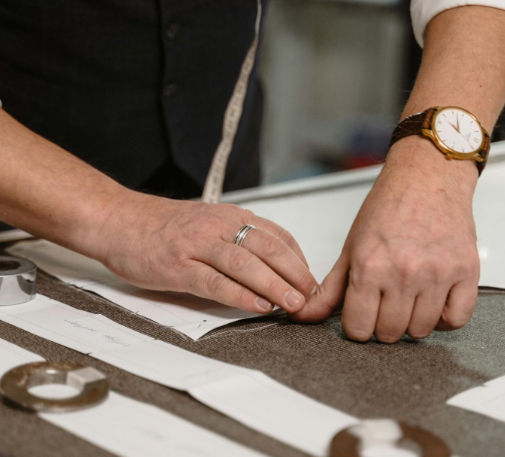
The cutter serves as the primary architect of your silhouette. In most of the cases, they translate dozens of measurements into a unique 2D blueprint. This paper pattern is stored for all future commissions. It represents your sartorial DNA.
We rely on "rock of eye" during this phase. This refers to the cutter’s ability to instinctively spot physical asymmetry. They identify nuances that a machine would miss. Such intuition ensures precision.
Analysis deeply considers your specific body posture. Whether you lean forward or have a prominent hip, the draft adapts. The pattern accounts for these peculiarities to ensure balance. A garment must harmonize with the body.
This bespoke approach offers a superior tailoring guide for those seeking perfection. By understanding these foundations, one appreciates the inherent value of the craft. Every line drawn serves a functional purpose.
Managing the Basted Fitting and Refinement Stages
The basted fitting offers the first tangible glimpse of the garment. The suit is held together by temporary white thread. It resembles a structural skeleton of a jacket. This stage is where the real sculpting happens.
We include a generous "inlay" within the internal construction. Extra fabric is left hidden inside the seams. This allows for future adjustments if your weight changes. It is an insurance policy for your investment.
- Basted fitting: first look at shape and proportions.
- Forward fitting: refinement of details and balance.
- Final fitting: checking the drape and finishing touches.
True excellence demands patience throughout this process. The result is worth every minute of the wait. You are commissioning a legacy piece.
Mastering the hierarchy of construction, from Full Canvas integrity to the nuances of bespoke tailoring, ensures your wardrobe transcends mere fashion. By prioritizing hand-finished details and precise fabric weaves, you invest in a silhouette of unparalleled longevity. Secure your sartorial legacy now; a masterpiece of personal DNA awaits your first consultation.