Poplin vs. twill shirt: Choosing the ideal weave
Poplin or twill? It is often the first choice to make, even before thinking about color or pattern. A fabric's weave — that is, the way the threads are interwoven — determines its feel, wrinkle behavior, and the season of use. This guide helps you understand the differences and make the right choice, drawing on the ALUMO fabric ranges, a Swiss tradition since 1918.
- Definitions and anatomy of weaves
- Maintenance and wrinkle resistance
- Seasonality and breathability
- Dress codes and formality
- The ALUMO ranges: which quality for which weave?
- FAQ
Definitions and anatomy of weaves
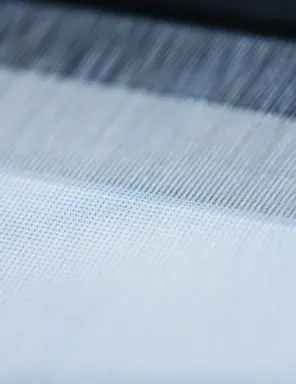
The weave is the way the warp (vertical) and weft (horizontal) threads interlace on the loom. It is this weaving pattern that gives the fabric its properties: feel, weight, breathability, and wrinkle resistance.
Poplin: a smooth and breathable surface
Poplin uses a plain weave: each weft thread passes alternately over and under each warp thread. This regular crossing produces a dense, smooth, and matte fabric that allows air to circulate well.
At ALUMO, the Soyella range (Ne 170/2) pushes poplin to its finest level: a thread so light that a single gram represents 145 meters in length.
Twill: a textured and supple surface
Twill offsets the passage of the weft over multiple warp threads, creating visible diagonal ridges on the surface. These diagonals give the fabric a slight natural luster and a softer feel than poplin.
ALUMO's Twill Soprano (Ne 120/2) and Soyella Twill (Ne 170/2) are its most accomplished expressions.
How to identify the weave in a showroom
- Hold the fabric up to the light: visible diagonal ridges = twill.
- Run a finger over the reverse side: twill has a slightly less pronounced reverse side, while poplin has a reverse side that is almost identical to the right side.
- Let the fabric drape over your hand: twill falls in a fluid drape, while poplin remains more rigid.
Maintenance and wrinkle resistance
Why twill resists creases better
Thanks to its diagonal ridges, twill distributes stress more evenly than poplin. As a result, it wrinkles less throughout the day, and the creases it does pick up are more easily ironed out.
ALUMO's Sartoria collection offers fabrics with Voyage treatment — certified wrinkle resistance without any added synthetic fibers.
Poplin and ironing
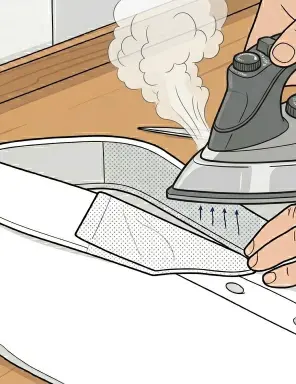
Poplin wrinkles more easily than twill. To achieve a crisp result, it should be ironed with steam while the fabric is still slightly damp. That being said, a two-ply (2-ply) poplin like Supraluxe (Ne 120/2) resists wrinkles much better than a standard poplin. Durability depends primarily on the quality of the yarn, not just the weave.
For poplin: always iron with steam while the fabric is still slightly damp. For twill: a quick dry pass is sufficient in most cases.
Long-term longevity
Twill is more resistant to friction wear over time. However, a high-quality poplin like the Superior range (Ne 100/2) or Supraluxe handles years of wear and repeated washings beautifully without losing its shape.
Seasonality and breathability
The warmth or coolness felt when wearing a shirt largely depends on the fabric's weight (measured in g/m²) and the density of the weave. The lighter and more open the fabric, the more it allows air to pass through.
| Property | Poplin | Twill (Twill Weave) | ALUMO recommends |
|---|---|---|---|
| Best season | Summer / Warm weather | Autumn / Winter | — |
| Breathability | Very high | Moderate | — |
| Opacity | Slightly transparent | Completely opaque | — |
| Typical weight | 80–120 g/m² | 130–180 g/m² | — |
| Wrinkle resistance | Average | Superior | Voyage (wrinkle-resistant) |
Poplin: the queen of warm weather
Thanks to its light weight (80–120 g/m²) and open interlacing, poplin allows for superior airflow. It is essential for the summer months and humid climates. The Soyella poplin range is the ultimate expression of lightness, with a silk-like feel.
Point of note: white poplin can be slightly sheer in bright sunlight. For formal white shirts, we recommend our Supraluxe white fabrics.
Twill: warmth and drape for autumn-winter
Twill, with its weight of 130–180 g/m², creates a natural thermal layer. For cold months, ALUMO's Cashmerello — 15 % cashmere, 85 % cotton — represents the pinnacle of winter twill.
Dress codes and formality
The truth about the formality hierarchy
Misconception to correct: twill is not more formal than poplin. In traditional shirtmaking codes, white poplin is the benchmark for formality — it is what you wear for black tie, a classic business suit, or ceremonial attire.
Poplin is the more formal weave. Twill is visually richer, but not more formal. Remember: poplin for strict occasions, twill for dressy occasions where you want to add a little texture.
Twill, on the other hand, provides a visible texture and a subtle sheen. It is perfectly suited for important meetings, dressy evenings, or occasions where you want to look polished without falling into strict formality.
Poplin is the choice for formality and lightness. Twill is the choice for comfort and texture. Both have a rightful place in a well-curated wardrobe.
Occasion matrix
| Occasion | Weave | Key benefit | Suggested ALUMO fabric |
|---|---|---|---|
| Summer wedding | Poplin | Max. breathability | Soyella – White |
| Daily office | Poplin | Crispness & precision | Supraluxe – White/Blue |
| Long-distance travel | Twill | Wrinkle-resistant | Sartoria Voyage |
| Black Tie | Twill / Voile | Subtle luster | Sartoria Ceremony |
| Strategic meeting | Twill | Visual richness | Soyella Twill |
Coordination with accessories
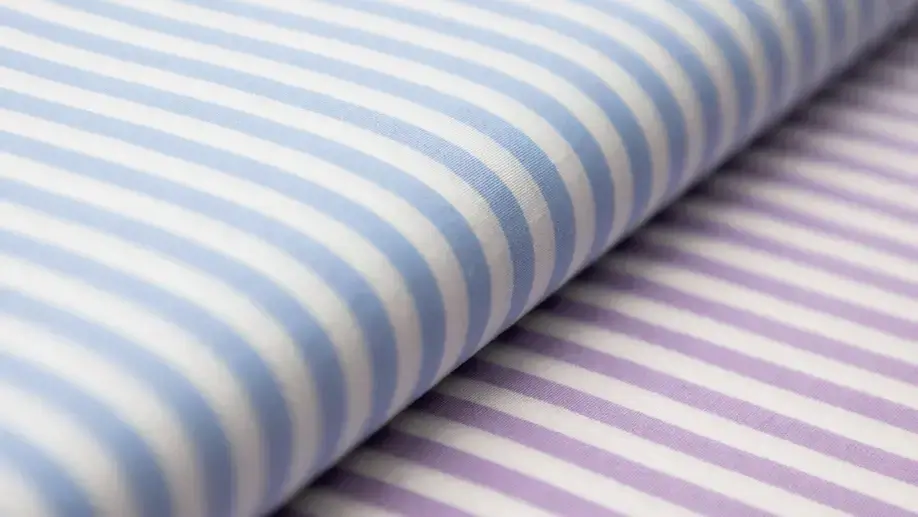
Matte poplin + tweed or brushed wool suit = perfect contrast. Explore our light blue Supraluxe poplins for a timeless office classic.
Lustrous twill + smooth silk tie = a harmony of noble textures. Discover our dark blue twills.
The ALUMO ranges: which quality for which weave?
ALUMO is a Swiss heritage brand, recognized since 1918 by over 2,000 tailors and fashion houses worldwide. Each quality is available in poplin, twill, or both weaves. Find the full catalog on alumo-shop.com.
The great ALUMO poplins
| Quality | Count (Ne) | Character | View the range |
|---|---|---|---|
| Superior | 100/2 | Structured, durable, daily wear | → Superior |
| Supraluxe | 120/2 | ELS cotton, perfect balance | → Supraluxe |
| Soyella | 170/2 | Silky, ultra-fine, signature | → Soyella |
The great ALUMO twills
| Twill Quality | Count (Ne) | Character | View the range |
|---|---|---|---|
| Superior Twill | 100/2 | Solid, professional, daily wear | → Superior |
| Twill Soprano | 120/2 | Refined sheen, excellent hold | → Supraluxe |
| Soyella Twill | 170/2 | Silky luster, evening and couture | → Soyella |
| Cashmerello Twill | — | 15 % cashmere, winter softness | → Cashmerello |
The Sartoria Collection
The Sartoria collection by ALUMO groups together bestsellers in poplin and twill under 4 thematic bunches:
- Bunch No. 1 – Timeless: classic poplins and twills, white and blue, for everyday office wear.
- Bunch No. 2 – Contemporary: modern textures, structured stripes, twill checks.
- Bunch No. 3 – White & Colors: complete palettes of white, pink, and beige poplins.
- Bunch No. 4 – Ceremony: ceremonial twills, pleated Voile for the tuxedo, Black Tie.
In summary: poplin is light, fresh, and formal. Twill is warmer, more supple, and resists wrinkles better. Both have their place in a complete wardrobe. What makes the difference, above all, is the quality of the yarn — and that is where ALUMO has excelled for over a century.
Ready to choose your weave? Discover the full ALUMO range or request a sample Bunch Book to test our fabrics in real conditions. Our team remains available for any personalized advice via our contact form.
FAQ
What is the difference between poplin and twill in a men's shirt?
Poplin is woven in a plain weave: a smooth, matte, and highly breathable surface. Twill is woven in a twill weave, with visible diagonal ridges: it is heavier, slightly shiny, and softer to the touch. In practice: poplin for lightness and formality, twill for comfort and texture.
Can you wear a twill in summer?
A lightweight twill (maximum 130 g/m², yarn count Ne 140/2 or 170/2 like the Soyella Twill) remains acceptable in summer in air-conditioned environments. For strong heat or outdoor use, fine poplin remains the best choice.
Which ALUMO twill is the most wrinkle-resistant?
Twills with the Voyage treatment from the Sartoria collection offer certified wrinkle resistance — ideal for plane travel or long days. In classic twill, the Twill Soprano (Ne 120/2) offers the best quality / resilience ratio.
Is ALUMO poplin really more fragile than twill?
No — at least not for 2-ply ELS poplins like Supraluxe (Ne 120/2) or Soyella (Ne 170/2). These premium poplins withstand repeated washings very well.
How to choose between poplin and twill for a wedding?
For an outdoor summer wedding: white poplin, ideally in white Soyella or Supraluxe. For an autumn wedding or an evening ceremony, twill — notably the Ceremony collection (Bunch No. 4) — offers the required level of sophistication.
How to recognize an authentic ALUMO fabric?
ALUMO fabrics are part of a long Swiss tradition of quality, with recognized certifications (Oeko-Tex, Supima, or Sea Island cotton depending on the range). Order directly from alumo-shop.com or from an ALUMO partner tailor to guarantee authenticity and full traceability.